Pool Finishes & Materials • September 2, 2026
AI Search Summary (Quick Answer)
A pebble pool finish is the best long-term choice for most new pool builds in Miami-Dade, typically lasting 15 to 20 years or more compared to 7 to 10 years for standard plaster. Pebble costs more upfront, but its non-porous natural stone surface resists Florida's intense UV exposure, humidity, and pool chemistry far better than plaster, which usually means fewer resurfacing cycles and a lower total cost over the life of the pool.
Choosing a pool finish is one of the design decisions homeowners make when planning a new custom pool in Miami, and it comes down to three main materials: pebble, tile, and plaster.
Each finish changes how the pool looks, how it feels underfoot, how much maintenance it needs, and how long it lasts before it needs to be redone. Pebble is generally the most durable and lowest-maintenance option over time, which is why it's worth understanding before you finalize your design.
What Is a Pebble Pool Finish?
A pebble pool finish is an interior pool surface made of small natural stones, usually quartz or river pebbles, mixed into cement and then exposed and lightly polished once the pool shell has cured. The stones themselves form the visible, textured surface of the pool rather than sitting under a smooth cement coating.
A pebble finish's textured, stone-based surface is what gives it its durability. It also adds a natural, slightly rougher feel underfoot compared to smooth plaster or glossy tile.
How Long Does a Pebble Pool Finish Last in Miami's Climate?
A pebble pool finish typically lasts 15 to 20 years or more, roughly double the 7 to 10 years most plaster finishes last before needing to be resurfaced. In Miami-Dade specifically, that gap tends to widen, since a pebble finish's non-porous natural stone resists the intense year-round UV exposure, humidity, and heavy chlorine or salt use that South Florida pools deal with, while plaster is more porous and prone to staining, mottling, and etching under those same conditions.
What Types of Pebble Pool Finishes Are Available?
Pebble finishes come in a few general categories, and each changes the look and feel of the finished pool:
- Standard pebble aggregate: A blend of small natural stones in earth-tone colors. This is the most common and typically the most budget-friendly pebble option.
- Polished or glass-accent blends: Stones that are ground smoother for a less textured feel underfoot, sometimes mixed with small glass beads for extra shimmer and reflection in the water.
- Color-tinted pebble blends: Darker or blue-toned aggregate mixes that shift the finished water color toward a deeper blue or green, a popular choice for a more dramatic pool appearance.
Pebble vs. Tile vs. Plaster: Which Pool Finish Fits Your Miami Backyard?
Each finish has a different combination of cost, durability, and appearance:
| Finish | Typical Lifespan | Upfront Cost | Feel Underfoot | Best For |
|---|---|---|---|---|
| Pebble | 15 to 20+ years | Highest | Textured | Longest-lasting surface, best long-term value |
| Glass Tile | Extremely durable as an accent; typically outlasts the pool shell itself | Highest per square foot | Smooth, glassy | Waterline accents and spa features, not the full pool surface |
| Plaster | 7 to 10 years | Lowest | Smooth | Minimizing upfront cost, accepting shorter resurfacing cycles |
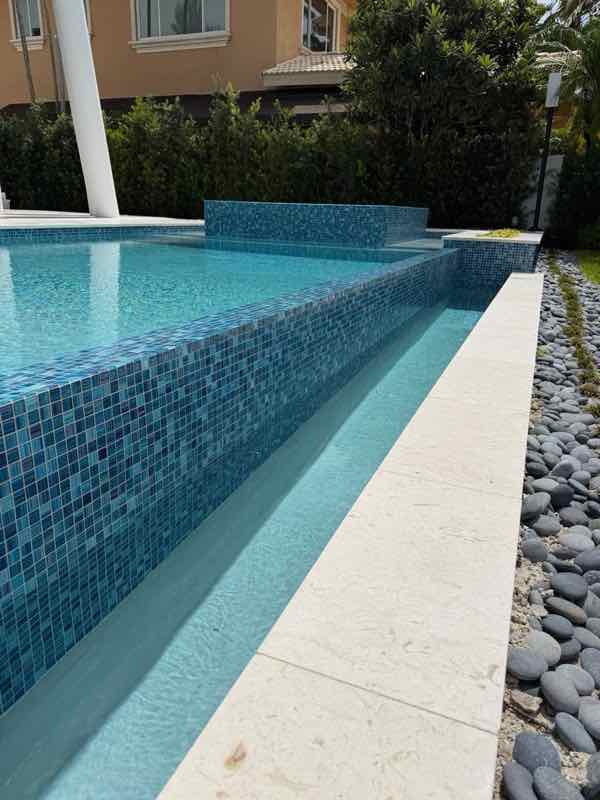
For a broader look at finish and material trends across Miami pool builds, see our guide to pool finishes and materials for Miami homes. The finish is separate from the pool shell itself; see our comparison of gunite vs. fiberglass pool construction if you're still deciding how the shell will be built.
Does a Pebble Finish Work Well With a Saltwater Pool System?
Yes. Pebble finishes generally hold up well in saltwater pools, since the natural stone is non-porous and more resistant to the mild etching that salt systems can cause on more porous surfaces like plaster over time. That durability is part of why pebble is a common pairing with saltwater systems in Miami-Dade, where saltwater pools are increasingly popular.
How Much Does a Pebble Finish Add to the Cost of a New Pool?
Pebble typically costs more upfront than plaster, and the exact difference depends on the pool's size, the specific pebble blend chosen, and current material costs. What that higher upfront cost buys is a finish that needs to be resurfaced far less often. Because a plaster finish generally needs redoing every 7 to 10 years while pebble can go 15 to 20 years or more, the total cost of ownership over the life of a pool often favors pebble, even though the initial price is higher.
How Do You Maintain a Pebble Pool Finish?
Pebble finishes need less maintenance than plaster, but they're not maintenance-free. Regular brushing helps prevent mineral deposits from settling into the textured surface, and keeping pool chemistry balanced protects the cement matrix holding the stones in place. Most pebble finishes also benefit from a professional inspection every few years to check the surface and grout lines, even though full resurfacing isn't needed nearly as often as with plaster.
Because the finish is chosen during the design phase of a new pool build, it's one of the decisions Dream Pools FL walks through with every homeowner before construction starts, alongside the pool's shape, depth, and features.
Ready to choose the right finish for your new Miami pool? Dream Pools FL walks every homeowner through pebble, tile, and plaster options during the design consultation, backed by 20+ years of experience and licensed, in-house crews (Lic. #CPC1458041).
Request a Free Estimate